The Parts of You That Only Show Up When You're Creating
Creativity & Expression
There was a version of you who had opinions about things that did not matter to anyone else. She had a phase. Maybe it was tie-dyeing everything she owned just because the colors felt right. Maybe it was filling journals with drawings that were not good but were entirely hers. Maybe it was the way she could spend an entire Saturday afternoon on a puzzle or a hike or a playlist, not because it was productive, but because something in her needed it. She did not question it then. She just did it, the way you do things when you have not yet learned to ask permission from yourself first.
You probably do not describe yourself as creative now. And that might be exactly the problem, because what you are waiting to reclaim is not a medium. It is a mode. It is the part of you that does things for no reason other than they call to her.
What We Actually Mean When We Say Creative
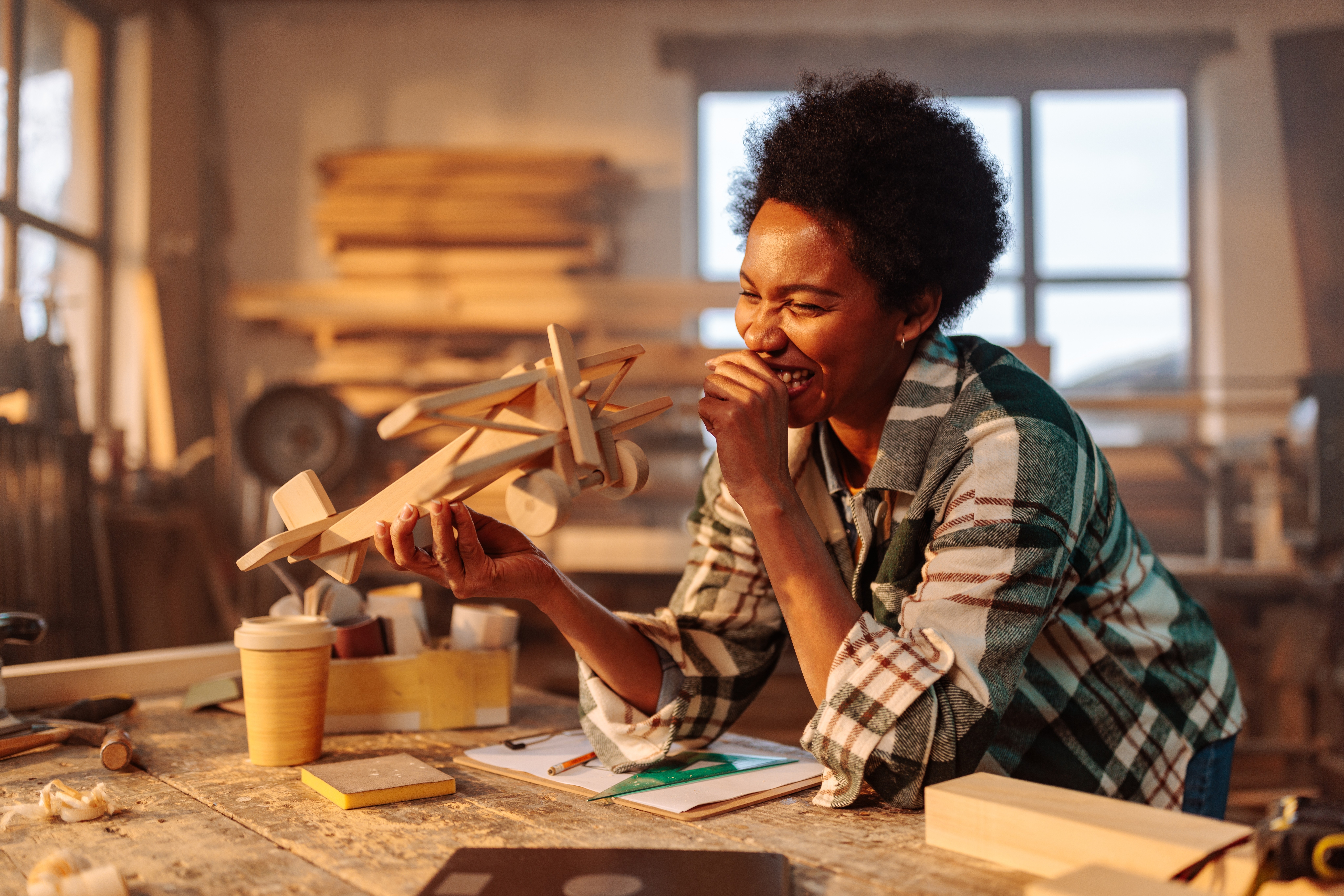
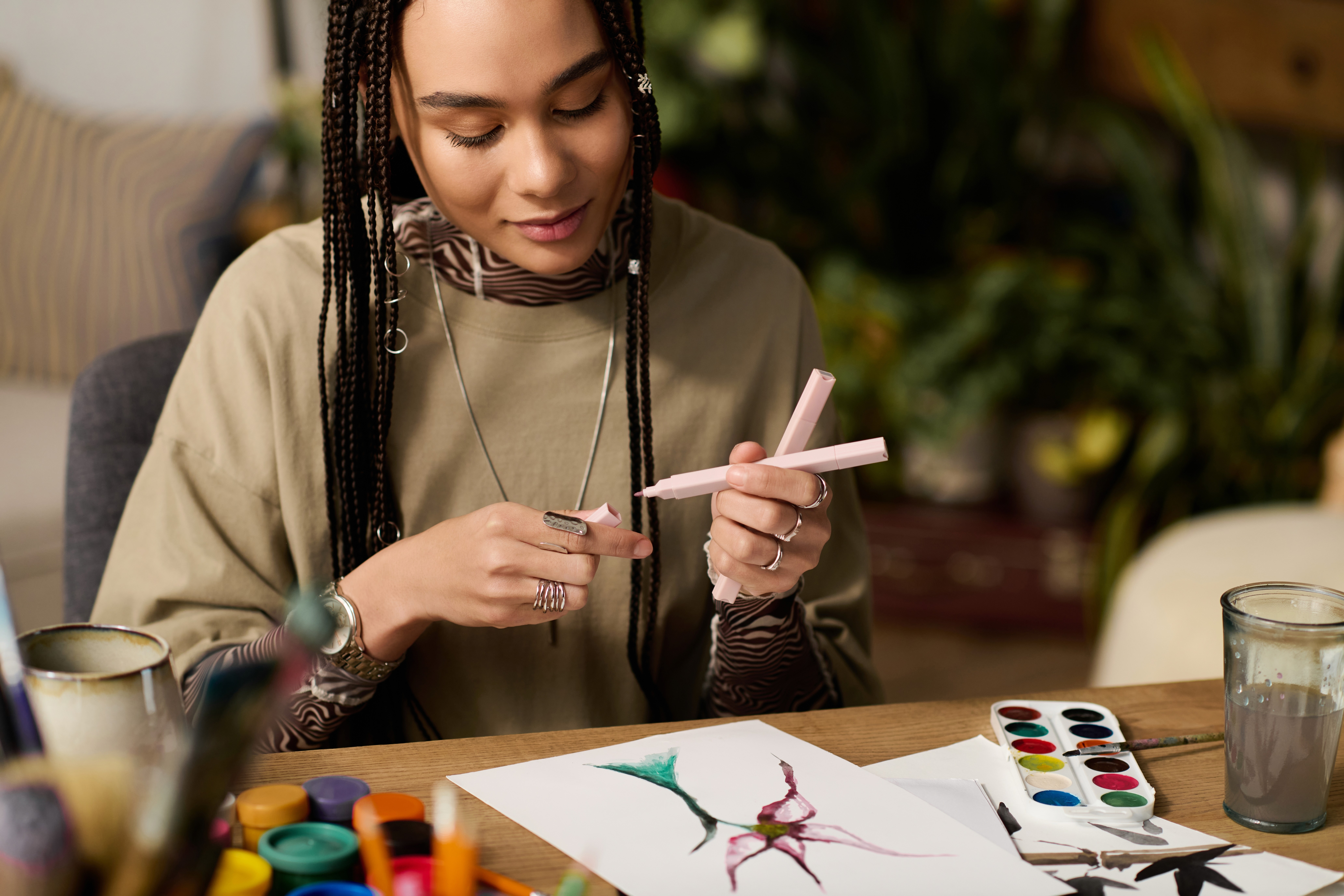
Creativity is not a personality trait reserved for artists. It is not about whether you can draw or write or make things with your hands. It is about self-directed engagement, choosing to do something because some part of you is drawn to it, without needing to justify that pull to anyone, including yourself.
That looks different for everyone. For some women it is painting or writing. For others it is the way they move through a trail on a Saturday morning, making small choices about where to step and what to notice. It is working a puzzle at the kitchen table at 10pm because something about finding where pieces fit brings a particular kind of quiet. It is roller skating badly in an empty parking lot. It is cooking something elaborate on a Wednesday for no occasion. It is any moment where you are following your own lead and it feels, for just a little while, like no one needs anything from you.
That feeling is not a small thing. It is a signal. It means a part of you has shown up that does not usually get to.
The Version of You That Obligation Buries
Most of us carry more versions of ourselves than we have room for. The one who manages things. The one who shows up for everyone. The one who holds the plan together. Over time, that version expands until she fills the whole room, and the others, the curious one, the whimsical one, the one who randomly had strong feelings about her wardrobe at seventeen, stop being called on. And what doesn't get called on starts to feel inaccessible. Not gone, just buried.
Psychologist Patricia Linville's research on identity found that people who maintain access to multiple distinct self-aspects are significantly more psychologically resilient. The more versions of yourself you can access, the less fragile you are when any one part of your life gets hard. But the inverse is also true. When identity collapses into a single role, mostly functional, mostly responsible, mostly in service of others, you lose the buffer. Everything rides on one version of you performing well. And the other versions, the ones who knew how to play and wander and try things just because, quietly go underground.
They are not gone. They are just waiting for you to create enough room for them to surface.
She Is Closer Than You Think
Here is what tends to happen when women start making space for this. They pick up something they used to love and feel clumsy and a little embarrassed. They sign up for a class and feel out of place. They start a puzzle and immediately want to look up the answer. They lace up skates and feel ridiculous. And underneath the embarrassment and the clumsiness is something else, something that feels a little like coming home to a house you forgot you missed.
That feeling is not nostalgia. It is recognition. The part of you that is showing up in those moments is not a younger, less evolved version of who you are now. She is a fuller version. One that got quietly set aside because life required more function and less play, and you were good at function, so the trade felt manageable.
It was not manageable. You just got used to it.
Noticing Who Shows Up
You do not need to overhaul your life to find her again. You just need to start paying attention.
What did you love doing between the ages of eight and eighteen that had no practical value whatsoever?
What activity makes you lose track of time in a way that has nothing to do with productivity?
When was the last time you did something purely because it seemed interesting, and what happened in your body when you did it?
Who are you when no one needs anything from you and you have nowhere to be?
That last question is not rhetorical. Sit with it. The answer is information.
She Has Been Patient Long Enough
The version of you that tie-dyed her wardrobe, that hiked to nowhere in particular, that spent hours on something with no outcome, she did not disappear when your life got full. She just stopped being invited.
You do not have to rebuild her. You do not have to explain her or schedule her or make her make sense. You just have to do one thing, any thing, that she would have chosen, and pay attention to what comes forward when you do.
She has things to tell you about who you are when you are not being useful to anyone. And she has been waiting a long time to say them.
Looking for more ways to tap into your joy? She EmpowHers is being built to help you discover how. Join the waitlist at sheempowhers.com/waitlist.